
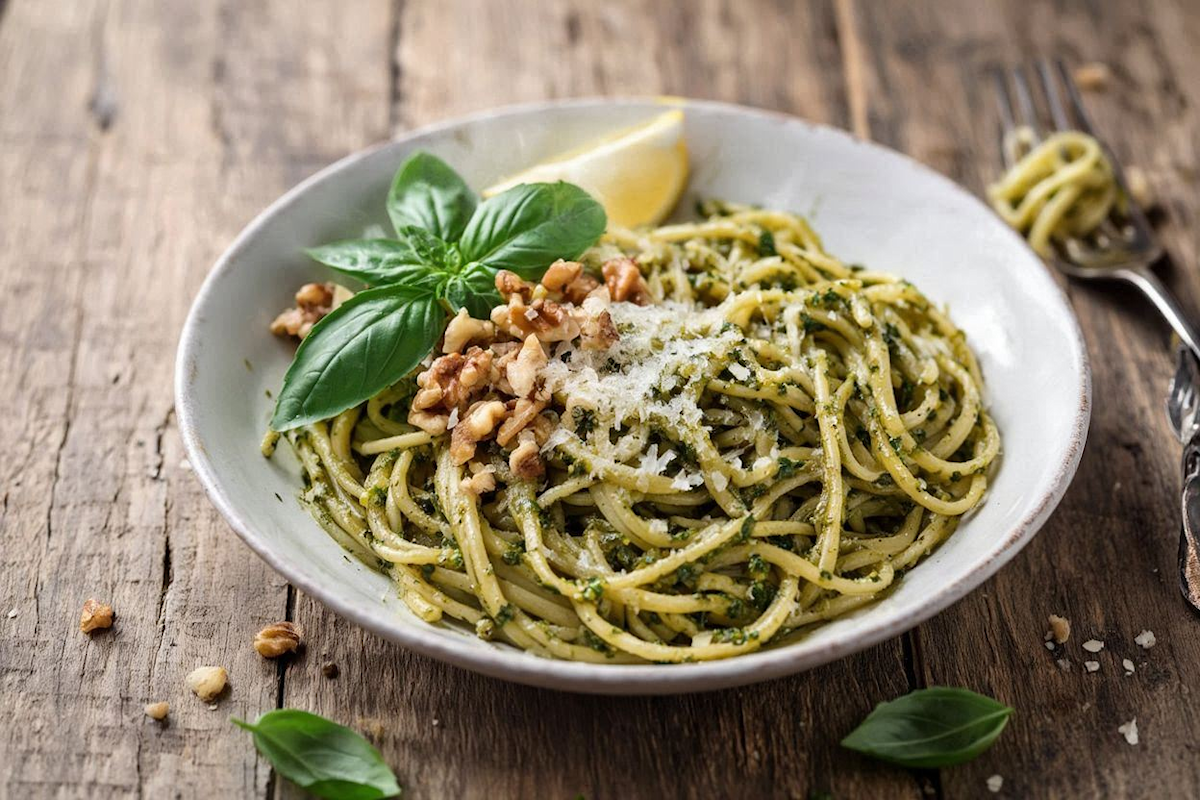
Here is something I did not know until I started really paying attention to food: basil is medicinal. Genuinely. It contains eugenol, rosmarinic acid, and beta-caryophyllene — compounds with real, studied anti-inflammatory activity. Olive oil has oleocanthal, which works similarly to ibuprofen at a biochemical level. And walnuts deliver plant-based omega-3s and polyphenols that gut bacteria love. So pesto — this sauce I have been making for years because it is fast and delicious — turns out to be one of the most anti-inflammatory things I could be putting on pasta. I have been accidentally doing something right this whole time.
The Recipe
Serves: 4 | Total Time: 20 minutes
Ingredients
- 12 oz pasta (whole grain, lentil, or chickpea pasta recommended)
- 2 cups fresh basil leaves, packed
- ½ cup walnuts or pine nuts, toasted
- 3 garlic cloves
- ½ cup extra-virgin olive oil
- 2 tbsp nutritional yeast
- Juice of ½ lemon
- Salt and black pepper to taste
- Cherry tomatoes for serving
- Extra basil for garnish
Instructions
- Cook pasta according to package directions. Reserve ½ cup pasta water before draining.
- Toast walnuts in a dry pan over medium heat for 3–4 minutes until fragrant.
- Blend basil, walnuts, garlic, nutritional yeast, and lemon juice in a food processor.
- With the processor running, drizzle in olive oil until smooth. Season with salt and pepper.
- Toss hot drained pasta with pesto, adding pasta water as needed for a silky sauce.
- Serve topped with cherry tomatoes and fresh basil.
What Is Actually Happening in Your Body
Using legume-based pasta — lentil, chickpea, brown rice — stacks protein and fiber on top of everything the pesto is already doing. Chickpea pasta delivers 14-16 grams of protein per serving versus 7 grams in conventional wheat pasta. The glycemic index is substantially lower, meaning steadier blood sugar and sustained energy rather than a spike and crash.
The flavor-to-effort ratio here is extraordinary. Five minutes in a food processor. No cooking beyond boiling pasta. Stores in the fridge for a week, the freezer for months. This is the weeknight salvation recipe — the one that means you never have to choose between feeding yourself real food and having energy left at the end of the day.