
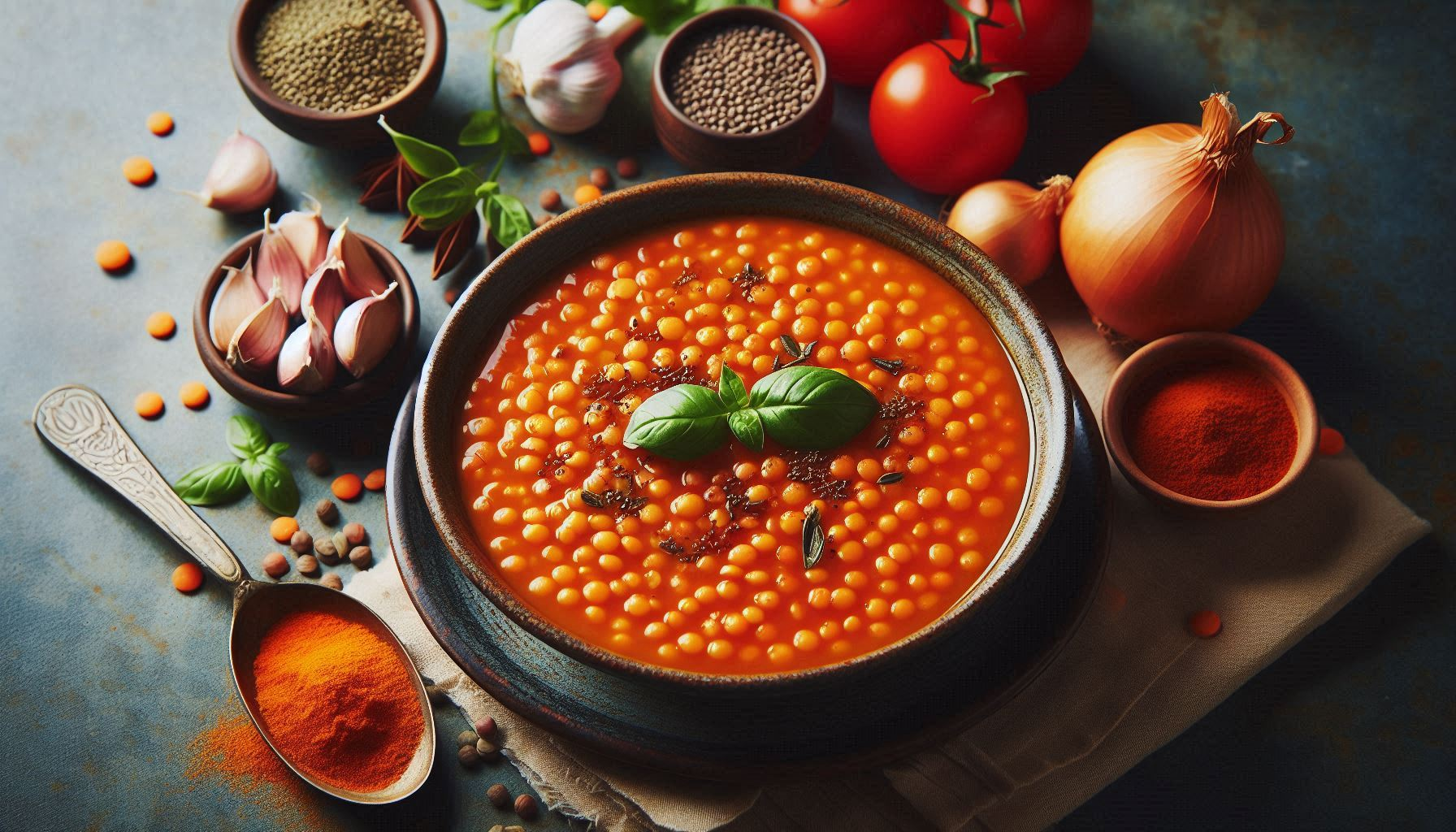
Okay so I have to tell you about red lentils, because I feel like nobody talks about how genuinely incredible they are — and I think that's a crime. One cup of cooked red lentils gives you 18 grams of plant protein and 16 grams of fiber. They cook in 25 minutes. No soaking. No planning ahead. Just rinse them, drop them in a pot, and let them work.
What gets me is how they dissolve into the creamiest, most comforting base without a single drop of dairy. Add cumin, turmeric, and fresh ginger — which you should always be doing anyway — and you're not just cooking dinner. You're stacking anti-inflammatory benefits on top of gut-supporting fiber on top of serious plant protein. That's not just a meal. That's a health decision in a bowl.
I made this on a Tuesday when I was tired and stressed and genuinely did not want to cook. By the time I sat down with that bowl of something warm and golden and fragrant, I felt like I'd done something good for myself. Because I had. There's something about a bowl of lentil soup that feels like a hug you made for yourself — and we seriously underestimate how much that matters.
The Recipe
Serves: 4 | Prep: 10 min | Cook: 20 min | Total: 30 minutes
Ingredients
- 1½ cups red lentils, rinsed
- 1 medium yellow onion, diced
- 4 garlic cloves, minced
- 1 tbsp fresh ginger, grated
- 2 tsp cumin
- 1 tsp turmeric
- 1 tsp smoked paprika
- 1 can (14 oz) diced tomatoes
- 4 cups vegetable broth
- 1 cup full-fat coconut milk
- Juice of 1 lemon
- Salt and black pepper to taste — be generous with the pepper (it matters, see below)
- Fresh cilantro for garnish
- 2 tbsp olive oil
Instructions
- Sauté the aromatics. Heat olive oil in a large pot over medium heat. Add onion and cook for 5 minutes until softened and translucent.
- Add garlic and ginger. Cook for 1 minute, stirring constantly, until fragrant.
- Toast the spices. Stir in cumin, turmeric, and smoked paprika. Toast for 30 seconds — this blooms the essential oils and transforms the flavor. Do not skip this step.
- Add lentils and broth. Add rinsed red lentils, diced tomatoes, and vegetable broth. Bring to a boil over high heat.
- Simmer. Reduce heat to low, cover, and simmer for 20 minutes, until lentils are completely soft and beginning to dissolve into the broth.
- Finish. Stir in coconut milk and fresh lemon juice. Season generously with salt and a lot of black pepper.
- Blend for texture. Use an immersion blender to blend about half the soup directly in the pot — velvety base, some whole lentils for texture.
- Serve. Ladle into bowls and top with fresh cilantro.
What's Actually Happening in Your Body
Red lentils deliver 18 grams of plant protein and 16 grams of dietary fiber per cooked cup — that's a gut microbiome decision and an anti-inflammatory one happening simultaneously. The cumin, turmeric, and ginger in this recipe aren't just flavor. They're bringing bioactive compounds with decades of research behind them.
The Butyrate Story — Why Lentil Fiber Is Different
The fiber in red lentils feeds the specific gut bacteria that produce butyrate — a short-chain fatty acid that is the primary fuel source for colonocytes, the cells lining your large intestine. Butyrate plays a critical role in maintaining intestinal barrier integrity. A strong intestinal barrier means fewer inflammatory compounds leaking into your bloodstream — a process increasingly linked in research to systemic inflammation, autoimmune conditions, and metabolic disease.
Butyrate also has direct anti-inflammatory effects at the cellular level, modulates immune function, and has been associated in published research with reduced risk of colorectal cancer. When you eat this bowl of soup, you are feeding the bacteria that produce the compound that protects your gut wall. That chain of events — food → fiber → bacteria → butyrate → intestinal protection — is one of the most well-documented mechanisms in gut health science.
Traditional cultures around the world built their food systems around lentils for centuries — from the dals of India to the shorba of the Middle East to the soups of the Mediterranean. Modern longevity and gut microbiome research keeps pointing at these same populations and confirming what they already knew. Every bowl is you betting on yourself.
Stack the Benefits Even Further with ICE
If gut health is something you're actively building — and with this much fiber in your life, you already are — ICE from APLGO is worth knowing about. It's a whole-food botanical lozenge formulated specifically to support digestive comfort and gut function at the cellular level, delivered through Acumullit SA® nano-particle technology — a patented delivery system that converts botanical compounds into negatively charged particles small enough to be absorbed with exceptional efficiency that traditional supplements simply cannot match.
Think of it this way: the food does the heavy lifting. ICE supports the same system you're nourishing with every bowl of this soup — from a complementary botanical angle that food alone can't fully cover. A fiber-forward diet and targeted digestive support aren't competing strategies. They are the same bet, doubled down.
The science is overwhelming. The flavors are ridiculous. It takes 30 minutes. Make this tonight.