Your liver does over 500 distinct jobs. It filters everything in your blood — every meal, every medication, every environmental toxin, every metabolic byproduct your cells produce. It does this continuously, without a break, without a complaint, until the day it starts to struggle. HPR is built around the simple proposition that this organ deserves serious botanical support.
Why Everyone's Liver Is Under Pressure
Liver support isn't just for people with liver disease or a history of heavy drinking. In the modern world, the liver faces a load our ancestors never encountered: processed food additives and preservatives, over-the-counter and prescription medications (acetaminophen alone is a significant liver stressor), environmental pollutants and airborne particles, agricultural chemical residues in food and water, and the ongoing metabolic demands of processing refined sugars and industrial seed oils.
On top of that, chronic inflammation — which affects a significant percentage of the adult population — creates additional metabolic burden that the liver has to manage. And as we've explored in our nano plastics article, microscopic plastic particles are now accumulating in liver tissue and generating oxidative stress that wasn't in the picture even 30 years ago.
The liver is not struggling dramatically in most people. It's handling its load. But "handling it" and "thriving" are different things, and HPR is designed to support the difference.
The Four Core Hepatoprotective Botanicals
Milk Thistle Seed (Silybum marianum)
If the liver had a botanical guardian, it would be Milk Thistle. The active compound complex — silymarin — is one of the most extensively studied hepatoprotective substances in the world, with clinical research spanning decades and multiple continents. It works through four simultaneous mechanisms that make it genuinely exceptional:
- It is a powerful antioxidant specifically concentrated in liver tissue, neutralizing the reactive oxygen species generated by the liver's own detoxification processes
- It inhibits toxin binding to liver cell membrane receptors, preventing certain toxins from entering liver cells in the first place
- It stimulates protein synthesis in liver cells, directly supporting the regenerative capacity of liver tissue
- It modulates inflammatory signaling in the liver, reducing the chronic low-grade inflammation that accumulates from toxic burden over time
No other botanical addresses all four of these mechanisms simultaneously. Milk Thistle is in HPR for exactly this reason.
Turmeric (Curcuma longa)
Turmeric's curcumin is well-known as an anti-inflammatory compound, but its liver-specific benefits deserve more attention than they typically get. Curcumin stimulates the production of bile salts, contributing to bile flow and the liver's fat-soluble toxin clearance pathway. It also upregulates the liver's own antioxidant defense systems — including glutathione synthesis — and has demonstrated hepatoprotective properties in multiple clinical studies.
In HPR, Turmeric and Milk Thistle work in complementary fashion: Milk Thistle's silymarin protects liver cells and supports regeneration while Turmeric's curcumin reduces the inflammatory environment and stimulates the clearance pathways. Together they address both the defensive and active detoxification dimensions of liver support.
Artichoke (Cynara cardunculus)
Artichoke is the bile production specialist in HPR. Its primary active compound, cynarin, is a potent choleretic — a substance that stimulates bile production and secretion into the small intestine. This matters enormously because bile is not just a digestive juice: it's the liver's primary vehicle for excreting fat-soluble toxins, processed hormones, cholesterol metabolites, and other waste products. Without adequate bile flow, these substances recirculate rather than being eliminated.
Artichoke also contains luteolin and other antioxidants that provide independent hepatoprotective effects, and its fiber content supports digestive regularity — the downstream end of the elimination process that bile is part of.
Dandelion Root (Taraxacum officinale)
The dandelion is one of the most persistently underestimated medicinal plants in existence. Most people know it as a lawn weed. Herbalists have known it as a liver and kidney tonic for centuries. Dandelion Root supports bile flow independently from Artichoke, provides mild diuretic action that supports kidney clearance alongside liver detoxification, and contains inulin — a prebiotic fiber that feeds the beneficial gut bacteria that are intimately connected to liver health through the gut-liver axis.
The gut-liver axis is worth understanding: the liver receives blood directly from the intestines via the portal vein. A disrupted gut microbiome generates more endotoxins that travel directly to the liver for processing — adding to the toxic load. Dandelion's prebiotic fiber contribution helps maintain the gut microbial balance that keeps this portal load manageable.
The Supporting Ingredients
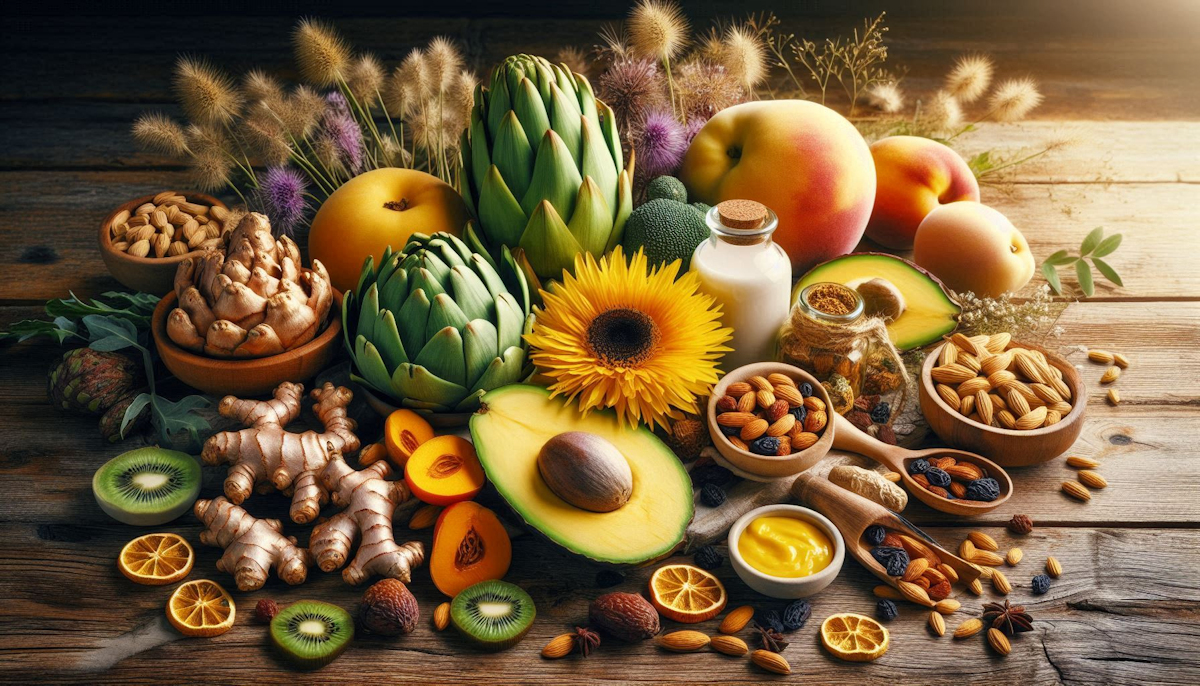
Avocado contributes glutathione precursors and healthy monounsaturated fats that support liver cell membrane integrity — the physical structure of liver cells depends on adequate healthy fat intake. Peach and Raisin Extract add fiber for digestive regularity and antioxidant compounds that support the broader cellular defense profile. Molasses provides iron, magnesium, and potassium — minerals that support the enzymatic processes the liver runs continuously.
The Elimination Dimension
Detoxification is a two-part process: the liver neutralizes toxins and conjugates them for excretion, but excretion requires functioning elimination pathways — bile flow into the intestines, intestinal transit, and kidney clearance. HPR supports all three sides of this equation: Artichoke and Dandelion stimulate bile flow, the fiber from Peach and Raisin supports intestinal transit, and Dandelion's mild diuretic properties support kidney clearance. The formula is built around completing the full detoxification cycle, not just supporting the first step.