Movement is not just a physical capability. It's a quality of life variable that touches everything — what you can do, how you feel doing it, and whether your body cooperates with the life you want to live. SLD is built around the botanicals that give the musculoskeletal system what it needs to keep cooperating.
What SLD Is Targeting
Joint discomfort, muscle soreness, and skeletal health concerns share a common underlying biology: inflammation, oxidative stress, and the gradual degradation of the connective and cartilaginous tissues that allow pain-free movement. SLD addresses all three dimensions through its botanical profile, with each ingredient contributing a specific and complementary mechanism.
Devil's Claw — The Anchor Ingredient
SLD and Devil's Claw belong together. Harpagophytum procumbens — named for the hook-shaped appendages of its fruit — is one of the most rigorously studied botanical anti-inflammatories in the world, specifically in the context of joint and musculoskeletal health.
Its primary active compound, harpagoside, inhibits COX-2 enzymes and nitric oxide synthesis — two of the central drivers of the inflammatory response that produces joint pain, stiffness, and swelling. The mechanism is structurally distinct from pharmaceutical NSAIDs, which is why Devil's Claw can deliver meaningful anti-inflammatory benefit without the gastrointestinal and cardiovascular risks associated with long-term NSAID use.
The clinical evidence is not ambiguous. Germany's Commission E — the German equivalent of the FDA for medicinal herbs, known for its rigorous standards — has officially approved Devil's Claw as a medicinal treatment for lower back pain and joint conditions. European clinical trials consistently demonstrate reduced pain scores, improved mobility, and decreased morning stiffness. If you want to understand Devil's Claw at a deeper level, our dedicated Devil's Claw article covers the full science.
Turmeric — The Complementary Anti-Inflammatory
Curcumin from Turmeric (Curcuma longa) is one of the most extensively researched anti-inflammatory compounds in existence, with thousands of published studies examining its activity across virtually every inflammatory condition. In the joint health context, it inhibits NF-κB — a transcription factor that controls the expression of dozens of inflammatory genes — alongside its COX and LOX enzyme inhibition.
The critical point for SLD is that Turmeric and Devil's Claw work on the inflammatory cascade through different but complementary mechanisms. Where harpagoside addresses COX-2 and nitric oxide, curcumin addresses NF-κB and the broader inflammatory gene expression. Combining them means more of the inflammatory pathway is blocked than either achieves alone.
Green Tea — The Tissue Protector
EGCG (epigallocatechin gallate) from Green Tea (Camellia sinensis) earns its place in SLD through its specific protective activity in joint tissue. Research has shown EGCG protects chondrocytes — the cartilage cells responsible for maintaining joint cushioning — from oxidative damage and inflammatory-induced degradation. It also inhibits enzymes (MMPs) that break down collagen in joint tissue, potentially slowing the structural degradation that drives progressive joint conditions.
In a formula focused on long-term joint health, the tissue-protective dimension of Green Tea complements the anti-inflammatory work of Devil's Claw and Turmeric: one reducing the inflammatory signal, the other protecting the tissue from the damage that ongoing inflammation would otherwise produce.
Ginger — The Circulation and Support Layer
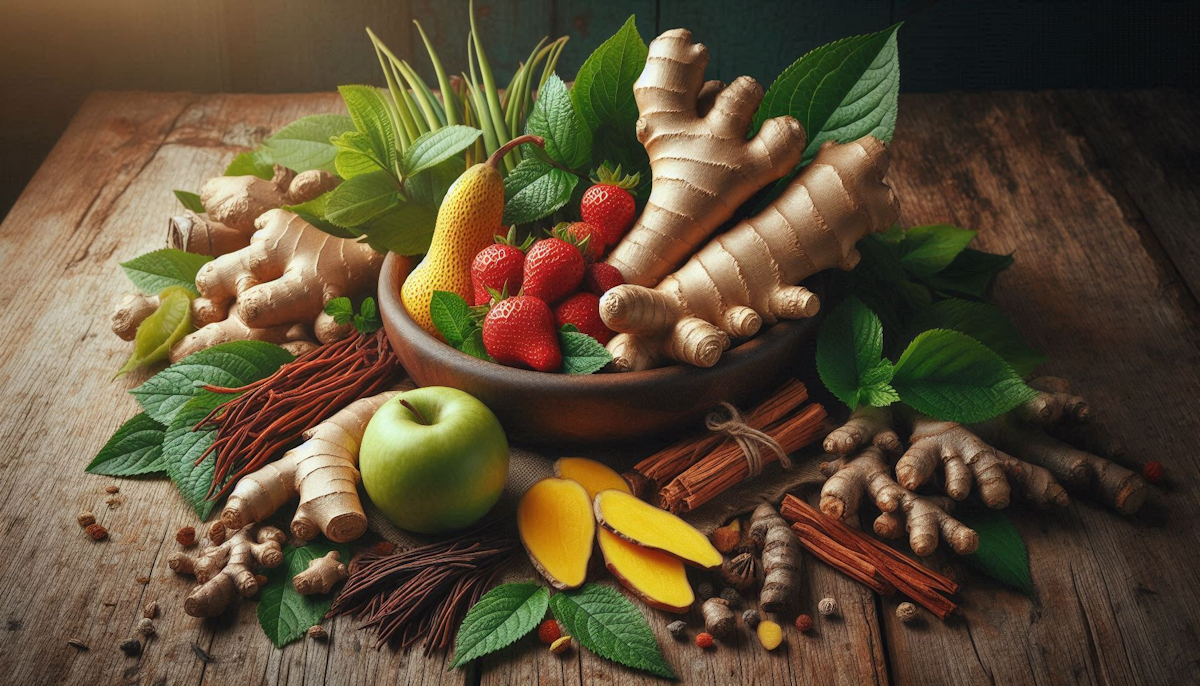
Ginger (Zingiber officinale) contributes to SLD through its gingerol compounds, which provide additional anti-inflammatory activity alongside meaningful vasodilatory effects. The circulation dimension matters specifically for joint health: joints have limited blood supply compared to other tissues, and their nutrition and waste clearance depend heavily on adequate blood flow. Ginger's circulatory-supportive properties help ensure that the anti-inflammatory botanicals reach joint tissue, and that metabolic waste from the inflammatory process is efficiently cleared.
Licorice — Systemic Anti-Inflammatory Support
Licorice Root's glycyrrhizin contributes broad anti-inflammatory and immune-modulating effects that complement the more targeted anti-inflammatory mechanisms of Devil's Claw and Turmeric. It also contributes a soothing effect on the gastrointestinal tract — meaningful for people whose joint conditions have led them to extended NSAID use, as NSAID-induced gastric irritation is one of the most common reasons people seek botanical alternatives.
Mineral Support from Molasses
Molasses contributes calcium, magnesium, and iron — minerals directly relevant to skeletal health. Calcium is the structural mineral of bone. Magnesium regulates calcium metabolism and bone density. Iron supports the oxygen transport that every tissue including musculoskeletal tissue depends on. In a joint support formula, these mineral contributions aren't incidental — they're the nutritional foundation that structural health requires.