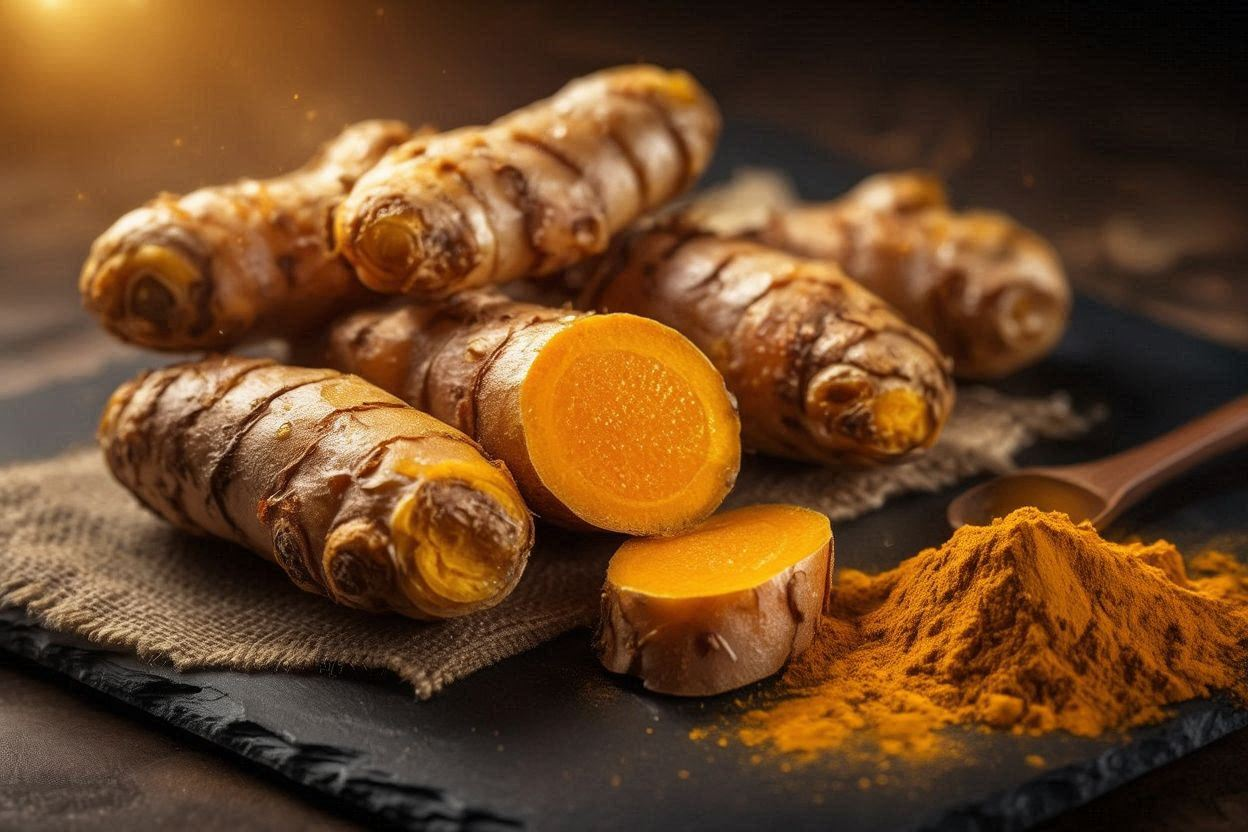
For millennia, a simple root has held a position of profound respect across vastly different cultures simultaneously — Ayurvedic medicine in India, Traditional Chinese Medicine, the healing traditions of Southeast Asia — without those cultures having contact with each other. That parallel independent recognition is not a cultural coincidence. It is a biological signal. A plant announcing its remarkable properties to the world. Modern science spent the last fifty years trying to understand what those civilizations already knew. What they found is extraordinary.
Curcumin — The Compound Inside the Root
The active work inside turmeric is done primarily by curcuminoids — a family of polyphenols with curcumin as the most abundant and studied. Curcumin represents only two to five percent of turmeric's dry weight, yet this molecule has demonstrated documented activity across inflammatory pathways, oxidative stress mechanisms, cellular signaling, and longevity biology, establishing it as one of the most profoundly studied natural compounds in the history of medicine.
The broader curcuminoid family — including bisdemethoxycurcumin and demethoxycurcumin — contributes to the full therapeutic profile. These related compounds work synergistically, and their combined influence is not fully replicated by isolated curcumin extracts alone. This is a critical point for understanding why whole-food botanical delivery matters.
The NF-kB Switch
NF-kB is the master regulator of inflammatory gene expression. It acts as a biological switch that turns on the production of pro-inflammatory cytokines — the molecules driving the chronic low-grade systemic inflammation now recognized as a common underlying factor in cardiovascular disease, metabolic dysfunction, cognitive decline, and accelerated cellular aging. Curcumin's documented ability to inhibit NF-kB activation is a cornerstone finding in botanical medicine. This is not downstream symptom management — it is working at the regulatory switch.
Longevity Biology
Research increasingly explores curcumin's relationship with fundamental aging processes. Studies investigate its influence on telomere health, cellular senescence — the process where cells cease dividing and begin secreting inflammatory signals that damage surrounding tissues — and autophagy, the essential cellular housekeeping process by which the body identifies and removes damaged components before they accumulate.
Neuroprotective properties are a growing area of intensive research. A significant body of work indicates curcumin's ability to cross the blood-brain barrier, supporting cognitive health through its dual anti-inflammatory and antioxidant mechanisms. Hepatoprotective properties are extensively documented — the liver, as the body's primary detoxification organ, benefits from turmeric's ability to protect hepatocytes and support healthy bile production.
The Bioavailability Problem — and the Solution
Curcumin is poorly absorbed by the body in its standard isolated form. Standard capsules produce minimal plasma concentrations because curcumin is metabolized rapidly before it reaches systemic circulation. Piperine — the active compound in black pepper — has been shown to increase curcumin bioavailability by up to 2000 percent by inhibiting the enzymes that break curcumin down before absorption. This is not a footnote. It is a central fact about how this plant actually works in the human system.
Turmeric is not a trend. It is not a superfood buzzword. It is the most extensively researched botanical on Earth. The deeper science delves, the more it finds. The convergence of ancient wisdom and modern scientific validation is unambiguous. The question is not whether turmeric works. The question is whether you're getting enough of it in a form your body can actually use.