
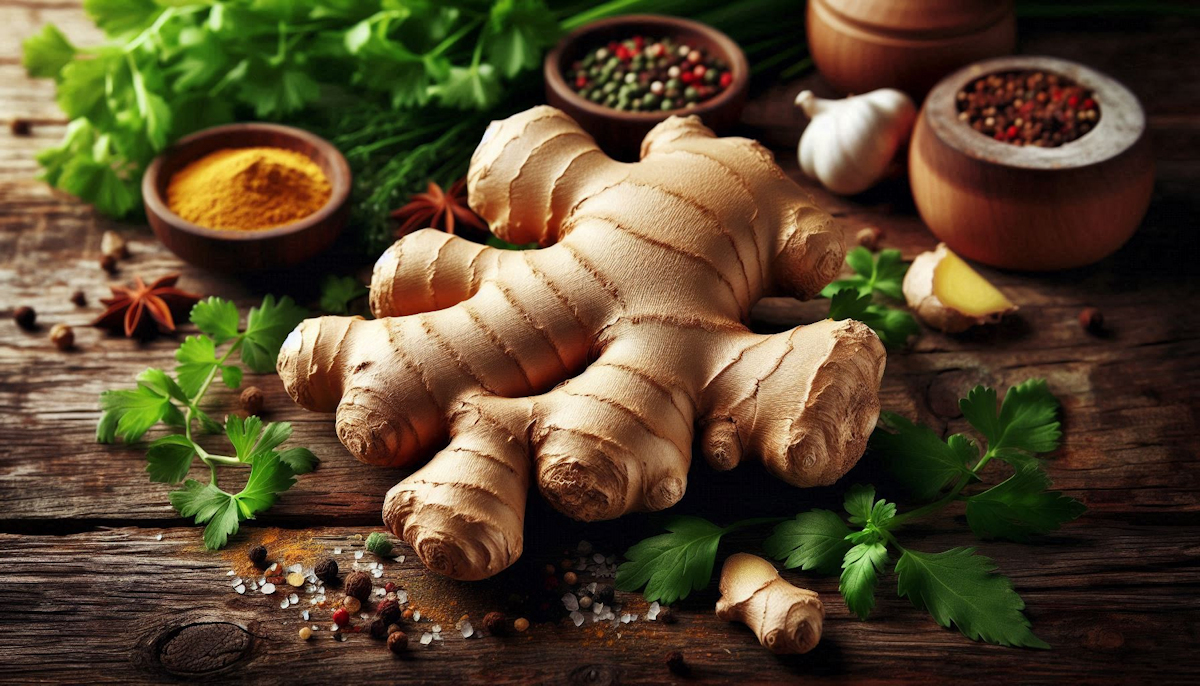
Ginger — Zingiber officinale — has been used as medicine for over five thousand years across virtually every major traditional healing system simultaneously. The mechanism behind its anti-inflammatory reputation was not understood until the twentieth century: gingerols inhibit the same cyclooxygenase enzymes as ibuprofen, while simultaneously inhibiting 5-lipoxygenase enzymes that produce inflammatory leukotrienes — a pathway pharmaceutical NSAIDs do not address. A controlled clinical trial directly comparing ginger extract to ibuprofen in knee osteoarthritis found equivalent pain reduction and functional improvement. Same efficacy profile. No gastric ulceration. No kidney function impairment. The remarkable root earned its reputation through mechanisms that modern pharmacology has now fully mapped.
Gingerols and Shogaols — Raw vs. Dried
Fresh ginger contains gingerols. When ginger is dried or cooked, gingerols dehydrate into shogaols — compounds that are more potent anti-inflammatory and antioxidant agents than the gingerols from which they derive. Research consistently shows shogaols produce stronger NF-kB and prostaglandin synthesis inhibition at equivalent concentrations. Dried standardized ginger extract therefore captures a different and in some ways more therapeutically potent compound profile than raw ginger preparations. This distinction matters for choosing between ginger formats and for understanding why clinical trial results using standardized dried extracts produce the outcomes they do.
Exercise Recovery Application
Multiple controlled trials have demonstrated 23 to 25 percent reductions in exercise-induced muscle soreness with consistent ginger supplementation starting several days before eccentric exercise. The mechanism is prostaglandin synthesis inhibition reducing the inflammatory component of DOMS. Starting ginger supplementation several days before planned eccentric training reduces the severity of the subsequent soreness response — a practical, researched, mechanism-explained application for anyone training consistently who wants to manage the recovery cost of high-intensity work. Five thousand years of medicinal use. One clinical trial against ibuprofen. Same outcome. Better safety profile. The remarkable root continues to earn its name.