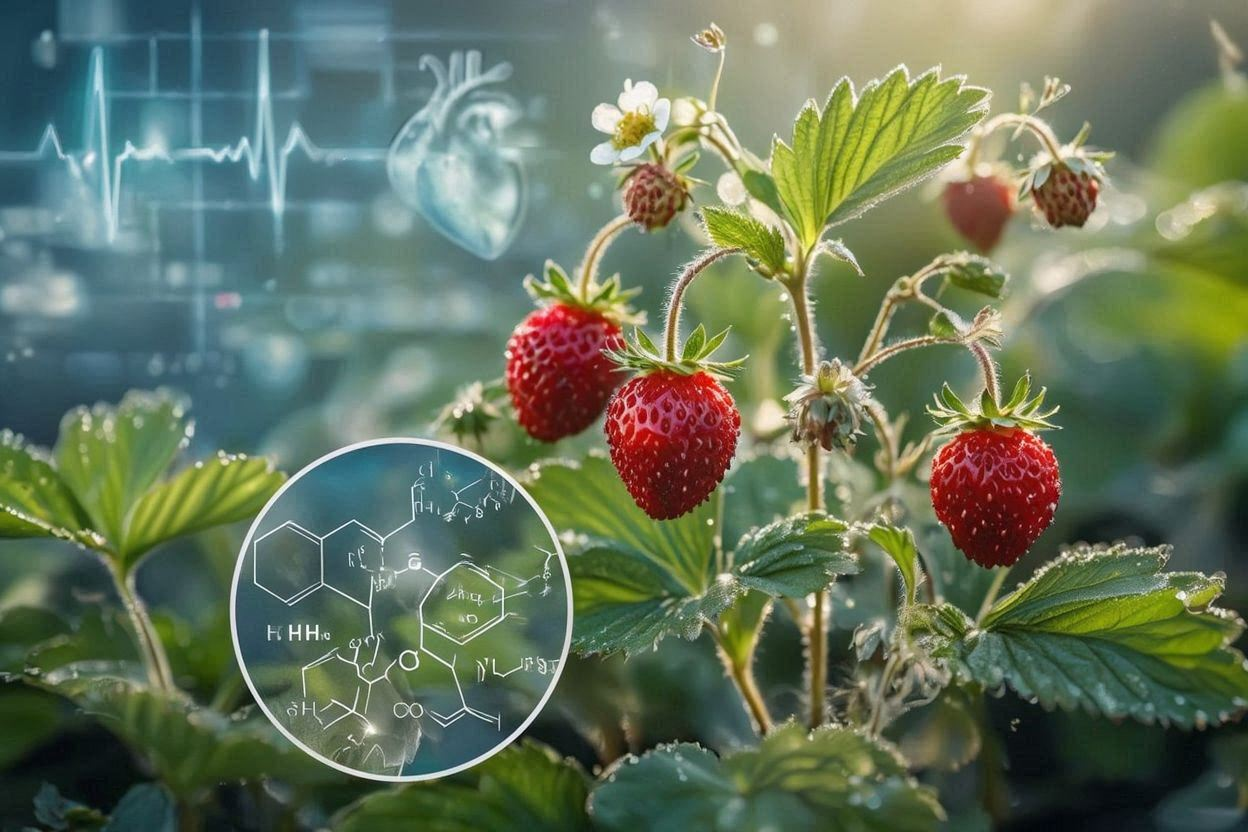
Wild strawberry — Fragaria vesca — is not the strawberry you find at the grocery store. It is smaller, more intensely flavored, botanically distinct, and packed with phytochemical concentrations that commercial cultivation has bred out in pursuit of size, shelf life, and uniformity. It has been used in traditional European medicine for centuries specifically for cardiovascular support. Modern science spent decades figuring out why. The answer turns out to be extraordinarily complex and extraordinarily compelling.
Anthocyanins — The Red Molecules With Red-Letter Cardiovascular Effects
The deep red color of wild strawberry comes from anthocyanins — a class of flavonoid pigments with direct, documented cardiovascular mechanisms. These compounds reduce the oxidation of LDL cholesterol, which is the form most associated with arterial plaque formation and atherosclerosis progression. They improve endothelial function by increasing nitric oxide bioavailability, supporting vascular dilation and healthy blood pressure regulation. They inhibit platelet aggregation, reducing thrombotic risk. And they work directly within the vascular endothelium to reduce the chronic arterial inflammation that underlies cardiovascular disease.
Vitamin C and Quercetin — The Supporting Cast That Is Not Supporting
A single cup of strawberries provides over 100 percent of the daily recommended vitamin C intake. In a cardiovascular context, vitamin C is essential for collagen synthesis — and collagen is the primary structural protein of arterial walls. Adequate vitamin C maintains arterial wall integrity and elasticity. It reduces circulating C-reactive protein, a key cardiovascular risk marker. It regenerates vitamin E, extending the antioxidant protection of both vitamins simultaneously.
Quercetin — the flavonoid present in meaningful quantities in strawberry — inhibits NF-kB and cyclooxygenase enzymes through mechanisms similar to pharmaceutical NSAIDs, at dietary doses, without gastrointestinal side effects. The combination of anthocyanins, ellagic acid, vitamin C, and quercetin in wild strawberry creates a multi-pathway cardiovascular profile that no single supplement can replicate because it is the product of the whole food, not any individual compound extracted from it.
Your heart has been waiting for the whole picture. Wild strawberry is a significant piece of it.