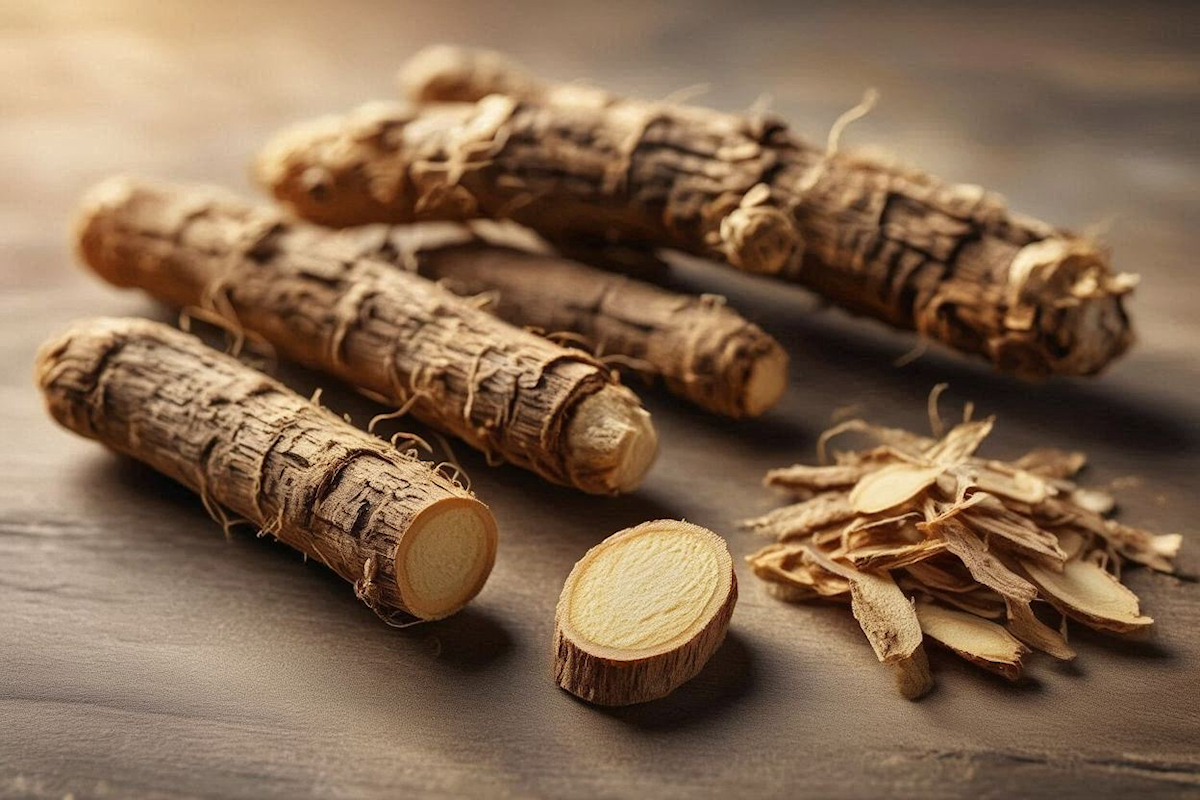
Astragalus root — huang qi in Traditional Chinese Medicine — has been used as an immune tonic for more than two thousand years. It holds one of the most prominent positions in the classical TCM pharmacopeia, classified as a superior tonic: safe for long-term use, capable of supporting fundamental physiological vitality. The concept of wei qi — defensive energy, the body's protective vital force — is what ancient Chinese medicine was trying to support with this root. Modern immunology now has a framework for exactly what wei qi is. And the research on astragalus matches the traditional application with remarkable precision.
Polysaccharides and the Immune Cascade
The polysaccharide fraction of astragalus root activates macrophages — the large immune cells responsible for pathogen engulfment, antigen presentation, and overall immune coordination. It stimulates natural killer cell activity, increasing the innate immune surveillance that detects virally infected and abnormally dividing cells. It promotes T lymphocyte differentiation and proliferation, supporting adaptive immune responses. And it influences dendritic cell maturation, which initiates specific adaptive immune responses to novel pathogens.
This is not immune stimulation in the blunt sense — it is immune modulation. The distinction matters. Research in cancer patients has demonstrated that astragalus supplementation can help restore immune parameters suppressed by chemotherapy. That is a system being brought back toward balance, not simply pushed harder in one direction.
The Safety Profile That Matters
Two thousand years of classification as a superior tonic — safe for long-term daily use — is not an accident. Clinical trials using standardized astragalus extract have not identified significant adverse effects at typical supplemental doses over periods of months. For individuals with autoimmune conditions or immunosuppressant medications, consultation with a healthcare provider is appropriate. For healthy adults, astragalus is among the most favorably profiled botanicals for consistent, sustained use. Ancient wisdom. Modern confirmation. This is the intersection where the best botanical medicine lives.