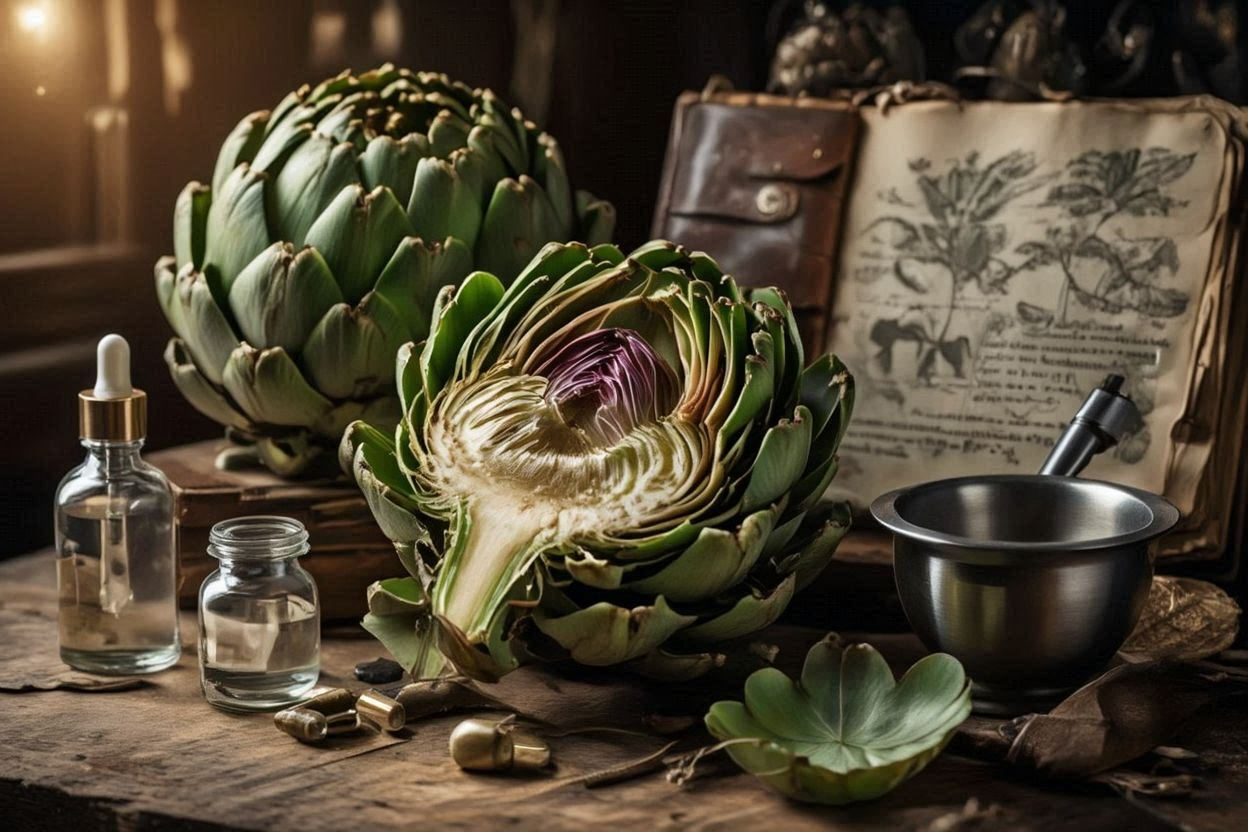
Artichoke has been used as medicine for at least two thousand years. Ancient Egyptians, Greeks, and Romans documented its use for liver and digestive complaints. The reasoning was empirical — people noticed it worked, without knowing why. Modern science spent the twentieth century figuring out the biochemistry. What it found was a remarkably sophisticated hepatoprotective and bile-supporting botanical with mechanisms that justify every bit of that ancient reputation.
Cynarin — The Bitter Compound With the Sweet Liver Effects
The characteristic bitterness of artichoke is produced by cynarin, the primary bioactive compound in artichoke leaf. This caffeoylquinic acid derivative stimulates bile production and bile flow from the liver and gallbladder through a mechanism called choleresis. Bile is essential for fat emulsification, fat-soluble vitamin absorption, and the elimination of cholesterol and bilirubin from the body. More bile means more efficient fat digestion, better elimination of cholesterol through the biliary pathway, and enhanced clearance of hepatic waste products.
This bile-stimulating action is the foundation of artichoke's documented effects on liver function and cholesterol levels. Multiple randomized controlled clinical trials have demonstrated statistically significant reductions in LDL cholesterol in participants taking standardized artichoke leaf extract — effects attributable directly to increased cholesterol excretion via stimulated bile and luteolin's documented inhibition of HMG-CoA reductase, the enzyme targeted by statin drugs.
The Prebiotic Dimension
Artichoke's inulin and fructooligosaccharide content feeds Bifidobacterium species and other beneficial gut bacteria, supporting microbiome diversity from a completely different angle than its hepatic effects. Clinical research demonstrates artichoke's effectiveness in reducing functional dyspepsia symptoms including bloating, nausea, and postprandial discomfort. The combination of bile stimulation, prebiotic fiber, and anti-inflammatory phenolic compounds makes artichoke a comprehensive digestive support botanical rather than a narrowly targeted liver herb.
Two thousand years of use. Consistent modern clinical evidence. Mechanisms that explain every traditional application. The ancient herb and the modern wellness ally are the same plant — artichoke just had to wait for science to catch up to what traditional medicine already knew.