A study published in 2022 found nano plastic particles in human blood samples. Another found them in placental tissue. Another in lung tissue from people who had never worked in a plastic-adjacent industry. The particles are there. They're accumulating. And the research on what they're doing once inside us is only beginning to tell a story that deserves serious attention.
What Nano Plastics Actually Are
Nano plastics are plastic particles smaller than 100 nanometers — for reference, that's smaller than most viruses. They are not a manufacturing byproduct someone designed. They form naturally from the ongoing fragmentation of larger plastic items as they're exposed to UV light, heat, and physical wear. Every piece of plastic that has ever existed is, over time, becoming smaller pieces of plastic.
These particles now exist virtually everywhere: in the deep ocean, in Arctic ice cores, in agricultural soil, in drinking water — both bottled and municipal — in sea salt, honey, beer, and the air inside most homes. Scientists estimate the average person consumes somewhere between tens of thousands and several million plastic particles per week through food, water, and inhalation combined. That number is not a typo.
The Specific Problem with Size
What makes nano plastics biologically concerning in a way that larger plastic debris simply isn't is their size. At the nano scale, particles can cross biological barriers that evolution never designed to handle them. They can pass through the gut wall into the bloodstream. They can cross the blood-brain barrier. They have been found in placental tissue — meaning they cross from mother to developing fetus.
Once inside tissue, two things happen that researchers have documented consistently:
- Oxidative stress — nano plastics generate reactive oxygen species that damage cell membranes, disrupt mitochondrial function, and degrade DNA integrity over time
- Inflammatory activation — the immune system recognizes these foreign particles and mounts an inflammatory response that, when chronic and low-grade, becomes damaging in its own right
Why the Liver and Intestines Bear the Brunt
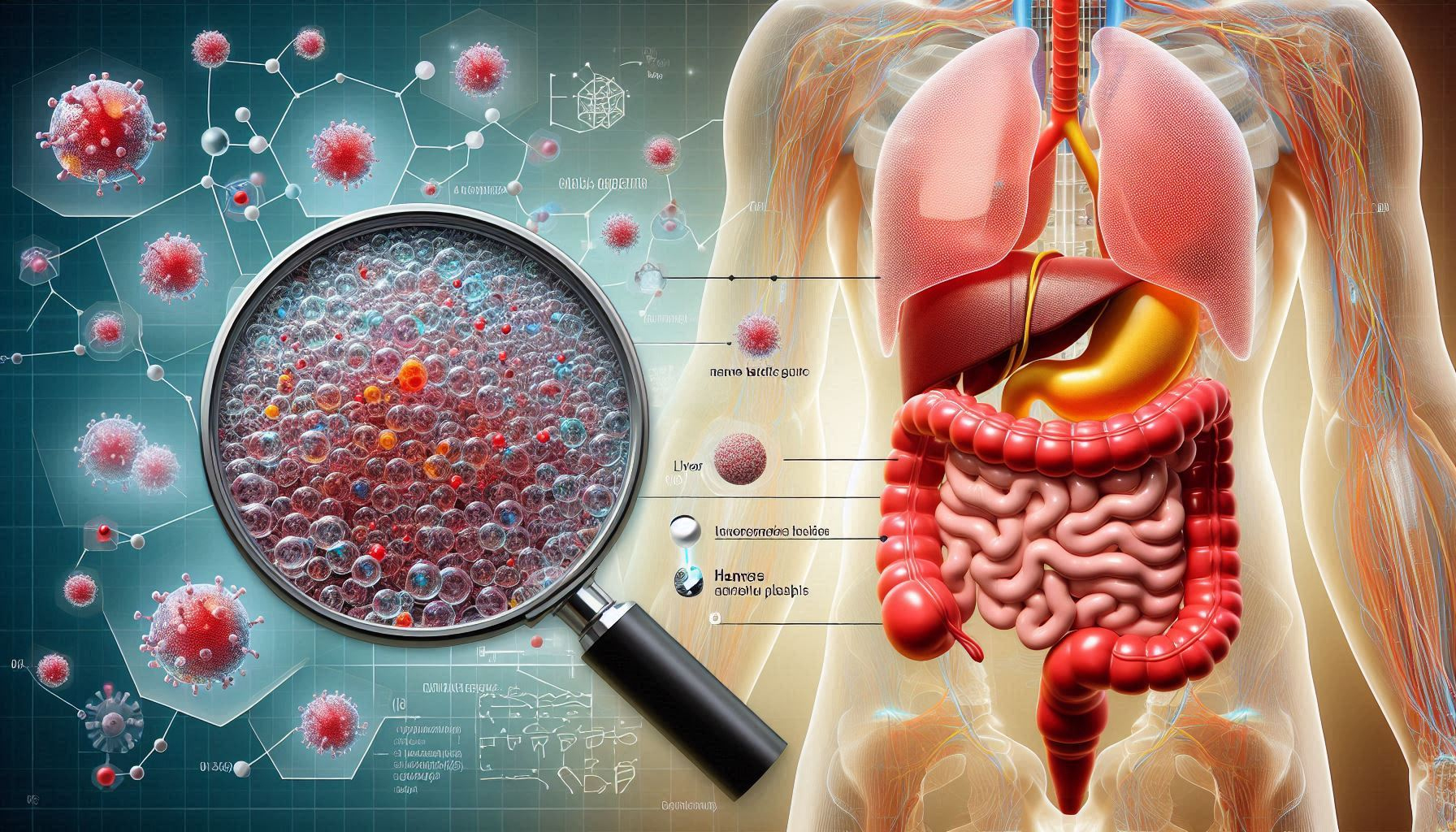
The liver is the body's primary detoxification organ. Everything absorbed through the gut passes through the liver before entering general circulation. That makes it a concentration point for nano plastics that cross the intestinal wall — the liver encounters them in high volumes, repeatedly, over years.
The intestines face a different kind of exposure. The gut lining, which is only one cell layer thick in places, is in direct contact with everything we ingest. Nano plastics in food and water interact with the intestinal epithelium constantly. Research has linked this exposure to disruption of the gut microbiome, increased intestinal permeability (the phenomenon colloquially called "leaky gut"), and localized inflammation that can affect nutrient absorption and waste elimination.
The combination of liver stress and gut disruption creates a compounding problem. When elimination is impaired, the body's ability to process and excrete toxins of all kinds is reduced — which allows further accumulation.
What You Can Actually Do
Complete avoidance of nano plastics is not currently achievable. But meaningful reduction in exposure — and meaningful support for the body's processing systems — absolutely is.
Reduce intake where you can
- Use a quality water filter (reverse osmosis significantly reduces plastic particle load in tap water)
- Reduce bottled water consumption — the plastic bottle itself is a source
- Avoid heating food in plastic containers — heat dramatically increases particle shedding
- Choose fresh, unpackaged produce over heavily packaged alternatives when practical
- Use laundry bags designed to capture synthetic microfibers during washing
Support your body's natural defenses
The liver and gut are not passive victims. They are active, adaptive systems with sophisticated detoxification and elimination machinery. Supporting those systems with targeted botanical nutrition is a legitimate and evidence-backed approach.
Key categories of botanical support that research has validated for these systems include antioxidant compounds that neutralize oxidative stress, bile-stimulating herbs that support liver clearance and fat-soluble toxin elimination, prebiotic fibers that maintain gut microbiome integrity, and hepatoprotective botanicals — plants with documented liver-cell protective properties.
The Bigger Picture
Nano plastic contamination is not a fringe concern or a conspiracy theory. It is an active, peer-reviewed area of environmental health research that has moved from speculation to documented biological reality in under a decade. The science is young, the long-term consequences are still being mapped, and the regulatory response remains years behind the evidence.
What that means practically is that we are living in a period where personal proactive choices matter more than usual — because institutional protection hasn't caught up. Understanding what's happening, reducing what you can control, and actively supporting your body's filtration and elimination systems is not paranoia. It is a rational response to the evidence we have right now.