
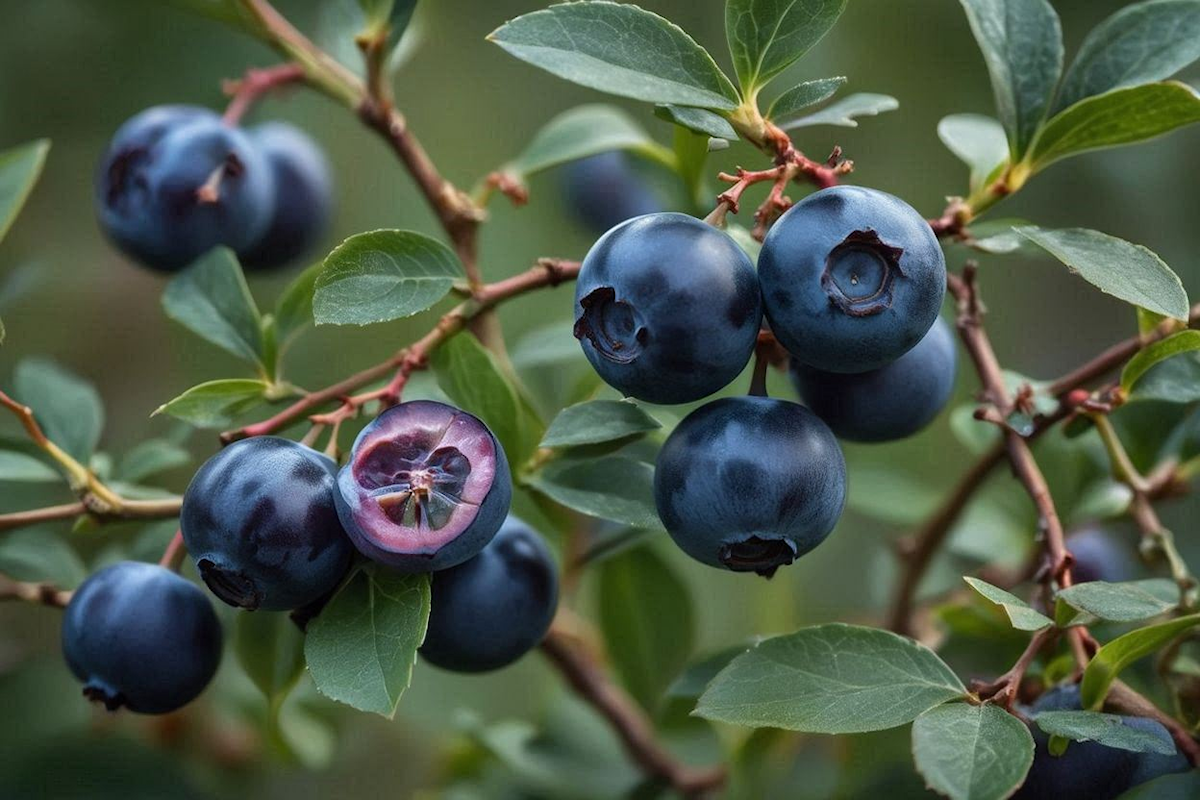
During World War II, British Royal Air Force pilots reported improved night vision after eating bilberry jam before missions. The military took this seriously enough to investigate it. Modern research confirmed what the pilots had noticed — bilberry anthocyanins protect rhodopsin, the photosensitive pigment in retinal rod cells responsible for low-light vision, from oxidative degradation. That story is the perfect introduction to bilberry: a small dark berry from Northern European forests with a phytochemical profile powerful enough to have documented effects on visual function, cognitive performance, and vascular health simultaneously.
The Anthocyanin Advantage
Bilberry accumulates anthocyanins throughout its entire flesh, not just the outer skin like blueberry. This structural difference produces anthocyanin concentrations three to five times higher per gram than commercially grown blueberries, alongside a more diverse profile of over fifteen distinct anthocyanin glycosides. Higher concentration plus greater structural diversity equals more comprehensive antioxidant and anti-inflammatory activity. This is why European pharmaceutical preparations use bilberry extract specifically, and why research outcomes using bilberry cannot be extrapolated from blueberry studies.
Vascular Support From the Retina Outward
Bilberry's vascular effects extend from the retinal microvasculature throughout the entire circulatory system. The anthocyanins strengthen capillary walls by stabilizing collagen in the vascular extracellular matrix, reducing fragility and the microbleeding associated with diabetic retinopathy and venous insufficiency. They improve endothelial function through nitric oxide bioavailability. They inhibit LDL oxidation. They reduce platelet aggregation. Clinical research in chronic venous insufficiency has demonstrated measurable reductions in leg heaviness, swelling, and pain.
A small dark berry from Nordic forests. Centuries of traditional use as food and medicine. Modern research confirming mechanisms sophisticated enough to explain every traditional application. Bilberry's power has been enduring because it was real to begin with.