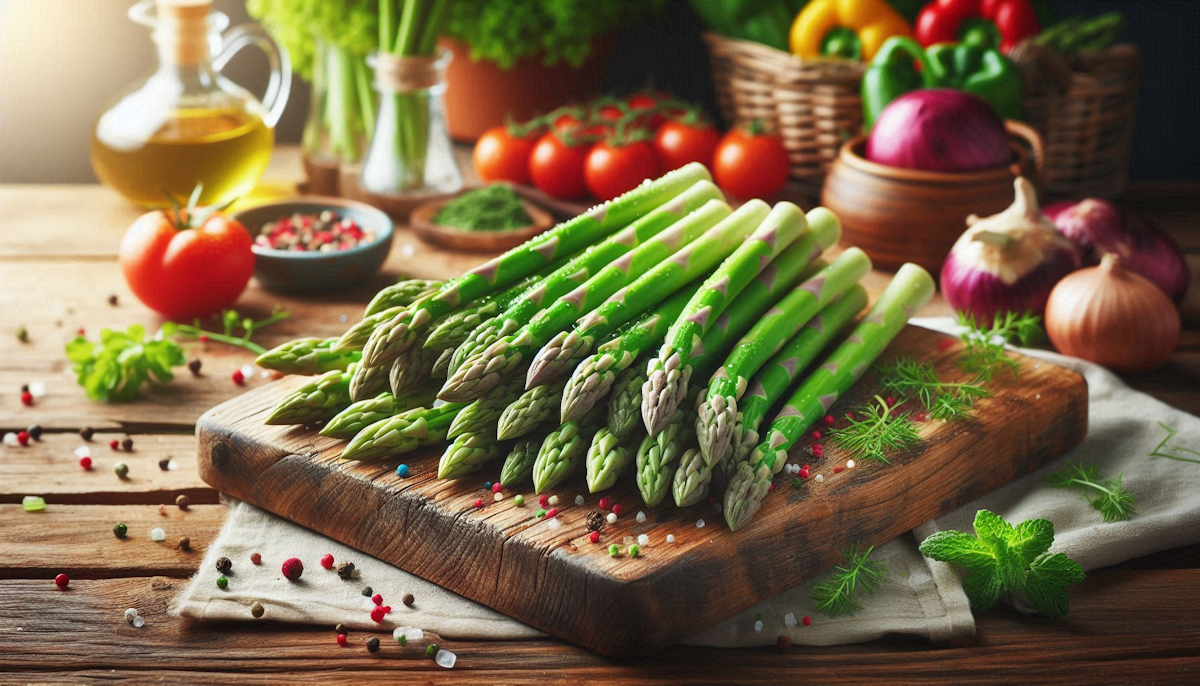
Asparagus is the highest folate vegetable commonly consumed. It is one of a small number of foods containing intact glutathione — the body's most important endogenous antioxidant — in amounts that survive digestion. Its inulin content specifically feeds the gut bacteria responsible for healthy estrogen metabolism. And it contains steroidal saponins documented in traditional Ayurvedic medicine — and its close relative Asparagus racemosus (shatavari) — for female hormonal support across reproductive life stages for over two thousand years. This vegetable is doing extraordinary work at the cellular level that most people eating it have no idea about.
Folate — The Most Critical Nutrient Most Women Underconsume
One hundred and thirty-four micrograms of folate per 100 grams. DNA synthesis, methylation cycle function, red blood cell production, homocysteine metabolism, neural tube protection in early pregnancy. The MTHFR gene variant affecting folate metabolism is among the most common genetic polymorphisms in human populations. Adequate folate before and during early pregnancy is one of the highest-impact nutrition decisions a woman can make. Asparagus is the highest-folate vegetable in the common diet, and most people eating it are not thinking about any of this.
The Estrobolome Connection
The estrobolome is the portion of the gut microbiome responsible for estrogen metabolism and circulation. Asparagus inulin specifically feeds Bifidobacterium, the bacterial species most relevant to estrobolome health. Healthy Bifidobacterium populations support appropriate estrogen conjugation and excretion through bile, preventing estrogen recirculation that can lead to hormonal imbalance. This is a dietary pathway to hormonal support that operates through gut microbiome modulation — accessible, controllable, and deeply connected to the steroidal saponins in asparagus that simultaneously influence female hormonal function through more direct pathways. The asparagus doing its work at dinner is working harder than it looks.